The professional calendar is often a minefield of must-attend summits and industry galas. For any high-growth organization, the temptation to maintain a constant physical presence is strong, yet the reality is that indiscriminate attendance is a drain on both capital and focus. To maximize impact, leadership must pivot from a culture of presence to a culture of performance.
The first step in auditing an event is identifying the specific lever you intend to pull. An event should serve a singular, dominant purpose, whether that is securing high-value leads, establishing thought leadership, or gathering competitive intelligence. If the objective is vague, the results will be equally nebulous. From a financial standpoint, the investment of time and capital becomes impossible to justify without a singular North Star to measure against.
When it comes to events for lead generation, high-level networking is only valuable if the room is populated by decision-makers rather than peers. The Rule of Three serves as a practical safeguard against the ambiguity of large crowds. A high-quality event should offer specific, granular access. Before a single flight is booked, leadership should be able to identify at least three high-value prospects and/or strategic partners with whom a 1:1 meeting is not just possible, but planned. If the attendee list is a black box or if the environment doesn’t facilitate direct, meaningful engagement, the ROI becomes a gamble rather than a calculation.
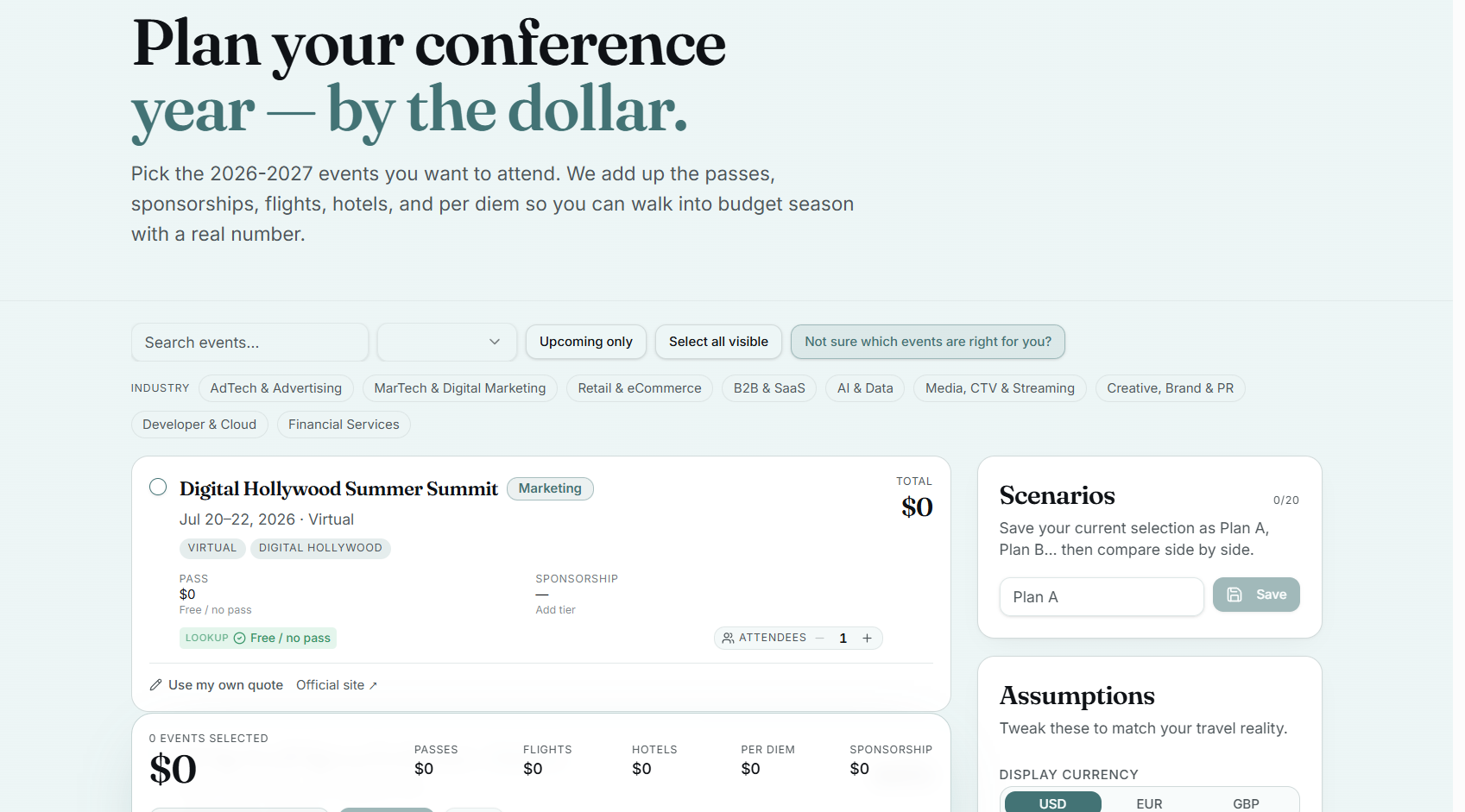
Finally, the decision must withstand a rigorous fiscal analysis. The total cost of attendance is never just the price of a badge. It includes the premium cost on travel (especially with gas prices these days), the activation of side events, and the often-overlooked opportunity cost of removing senior talent from the core operations of the business. Every hour a senior executive spends in an airport is an hour not spent on client delivery or internal innovation. Ultimately, when the cost of acquisition for a single lead exceeds the projected lifetime value, the event is a liability. A good strategy requires the discipline to skip the crowded rooms that offer nothing but noise, allowing you to double down on the moments that actually move the needle.
By applying a rigorous filter to the conference circuit, you ensure that when you do show up, you have the resources and focus to dominate the conversation.
Is your current event strategy delivering measurable value for your company? Reach out to DBC to audit your 2026 calendar and maximize your presence where it matters most.